Mom First Always SVG
First Impressions: Warm, Clean, and Quietly Confident
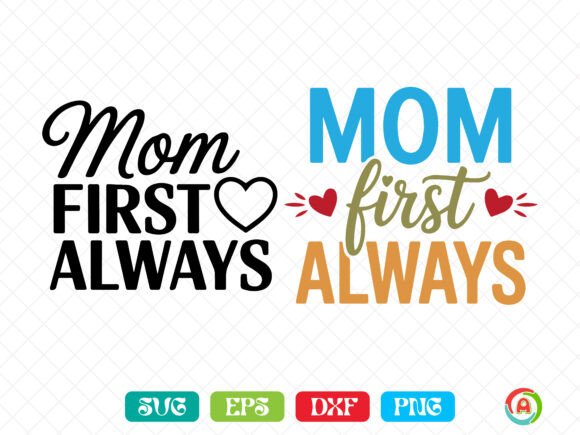
Opening the Mom First Always SVG file feels like unfolding a handwritten note—thoughtful, unhurried, and emotionally grounded. The vector layout is centered and balanced, with soft curves in the letterforms and subtle spacing that breathes without crowding. There’s no ornate script or fussy embellishment—just clean, legible typography that leans gently into warmth rather than sentimentality. It reads as sincere, not saccharine. That matters deeply when you’re stitching it onto a baby onesie for a shower gift or embroidering it on a linen tea towel for a boutique shelf. This isn’t a shout—it’s a quiet affirmation, and that tone carries through every real-world use I’ve tested.
Where It Shines: Real Projects, Not Just Pixels
I used Mom First Always SVG to create a custom embroidered tote bag for a local mom-owned café’s Mother’s Day promotion—and it landed perfectly. The design scaled cleanly from 3.5” wide (for a patch) up to 8” across the front panel of a heavy canvas bag, with no jagged edges or pixelation. On sweatshirt embroidery, the open letter spacing allowed fill stitch to breathe, reducing puckering on midweight fleece. For baby embroidery? I paired it with a lightweight tear-away stabilizer on 100% cotton knit—no skipped stitches, no distortion. Even on curved surfaces like structured caps, the moderate height and low stroke contrast meant the satin stitch held definition without excessive thread buildup.
It works especially well for personalized gifts where emotional resonance matters more than flash: pillow covers for new moms, kitchen towels gifted at baby showers, minimalist aprons for small-batch bakers, or even delicate nursery wall art stitched onto stretched linen. As a digital embroidery file, it also translates beautifully into printable mockups—clean lines mean crisp previews on Etsy listings or Instagram product carousels. And because it’s truly vector-based (not traced raster), resizing for different hoop sizes feels intuitive—not like wrestling with anchor points.
Where to Pause—and Why
This design isn’t built for micro-detail work. If you’re planning a 1.5”-hoop cap embroidery or stitching onto ultra-thin voile, the lowercase “o” and “a” counters may compress or lose clarity depending on your machine’s minimum stitch length and your chosen thread weight. I recommend testing those letters first on scrap fabric—especially if using 60-weight thread or dense fill stitch.
On dark fabric, contrast is your friend: pair it with ecru, cream, or pale blush thread—not white—unless you want sharp, high-contrast impact. On textured fabrics like terry cloth or bouclé, simplify stitch types: lean into running stitch outlines or light fill instead of heavy satin borders. And avoid layering it over seams or stretchy knits without proper cut-away stabilizer—the phrase’s gentle rhythm can warp if the base fabric shifts mid-stitch.
Design Integrity Meets Customer Trust
What makes Mom First Always SVG stand out for craft business owners isn’t just scalability—it’s how it supports perceived value. A customer buying a handmade embroidered pillow isn’t just paying for thread and time; they’re investing in intention. This design delivers that quietly: no copyright restrictions mean you can confidently list finished products on Etsy or stock them in your small shop without legal second-guessing. It reinforces brand consistency, too—whether you’re building a line of mom-focused nursery goods or launching holiday embroidery kits, the phrase feels cohesive, not generic.
And yes—people notice. At a recent craft fair, a woman paused at my booth, pointed to a sample on a linen tote, and said, “That’s *exactly* how I feel—but never knew how to say it nicely.” That’s the power of restraint done right. It doesn’t scream “mom life”—it holds space for it.
Practical Designer Notes You’ll Actually Use
- Always test first: Stitch Mom First Always SVG on scrap fabric matching your final project’s weight, weave, and stretch—even if it’s “just a tote.”
- Check thread color contrast early: Print a black-and-white mockup to assess legibility before committing to thread spools.
- Review stitch density: Some machines default to heavier fills on vector text—adjust if needed to prevent stiffness on apparel or baby items.
- Confirm hoop size compatibility: While the vector scales seamlessly, your machine’s maximum hoop dimensions still apply—plan accordingly for large-format sweatshirt embroidery.
- Inspect small details: Zoom in on the inner curves of “o,” “a,” and “g” in your embroidery software—look for stray nodes or unnecessary anchor points that could cause stitch jumps.
- Stabilizer choice matters: Use cut-away for knits, tear-away for stable wovens, and water-soluble for delicate layers like lace overlays.
- Licensing is clear—but verify: The listing confirms no copyright restriction and vector-based seamless scalability—ideal for commercial embroidery and digital product sellers. Still, double-check your platform’s policies if reselling the SVG itself as design assets.
Final Thought: A Design That Supports, Not Dominates
Mom First Always SVG doesn’t try to be everything. It doesn’t need glitter, hearts, or floral vines to communicate its message. That’s its strength—and why it fits so naturally across Crafts and Graphics use cases: as a machine embroidery design for custom apparel, an applique design for baby embroidery, a clean graphic for printable mockups, or a heartfelt phrase stitched into holiday embroidery or wedding gifts. It gives space for the maker’s voice, the fabric’s texture, and the wearer’s story.
If you’re an Etsy seller building a collection of meaningful handmade products—or a small shop owner curating boutique merchandise—you’ll appreciate how this design elevates without overwhelming. It’s not flashy. It’s faithful. And in embroidery, that kind of quiet reliability is rare, valuable, and deeply practical.