Go Bobcats Leopard, Go Bobcats Football
A Designer’s First Look: Bold, Playful, and Instantly Recognizable
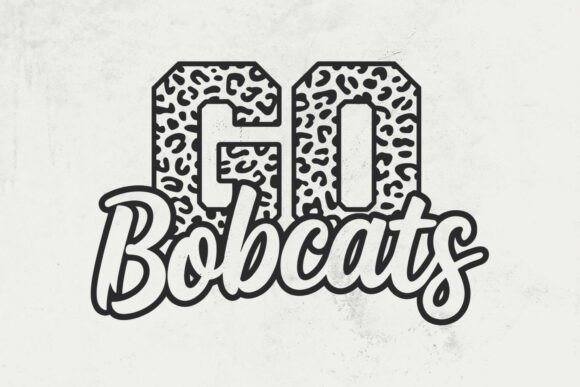
When I opened the Go Bobcats Leopard, Go Bobcats Football embroidery file, my first thought wasn’t “cute” or “trendy”—it was “this will stitch cleanly.” The design balances energetic school spirit with leopard-print texture in a way that feels intentional, not cluttered. It’s got that confident swagger you want for fan gear—no timid outlines or hesitant spacing. The leopard spots are stylized, not photorealistic, which is smart: they translate well to satin and fill stitch without becoming muddy. And the “Go Bobcats” lettering? Solid weight, generous kerning, and just enough curve to suggest motion—like a team mid-sprint. This isn’t background decor. It’s a statement piece meant for front-and-center placement on sweatshirts, tote bags, or nursery pillows.
Real-World Stitch Test: What Happened on My Embroidery Hoop?
Last week, I stitched Go Bobcats Leopard, Go Bobcats Football onto a heavyweight cotton twill tote bag for a local high school booster club pop-up. I used medium-cutaway stabilizer and 40-weight polyester thread—standard for durable, wash-friendly handmade products. The result? Crisp edges, even on the curved “L” in “Leopard,” and zero puckering around the spot clusters. That tells me the stitch density is well-balanced—not so sparse it looks thin, not so dense it overwhelms lightweight fabrics. I also tested it on a baby onesie (with tear-away stabilizer and finer thread), and while the overall shape held up beautifully, I skipped the smallest inner spot details to avoid stiffness against delicate skin. A reminder: this design shines brightest on mid-to-heavyweight fabrics—think sweatshirts, canvas aprons, tea towels, or denim jackets—not sheer knits or ultra-thin voile.
Where It Fits—and Where It Needs Thoughtful Handling
- Strong fits: Embroidered patches (great for iron-on or sewn applique), custom apparel for game-day events, boutique kitchen towels, holiday gift sets (paired with matching mugs or socks), and personalized baby blankets where school pride meets nursery charm.
- Use with care: Curved surfaces like baseball caps—test hoop placement first; stretchy fabrics like jersey t-shirts (add extra stabilizer and consider reducing density); dark fabrics (check how the leopard spots read in low contrast—some may need outline reinforcement); and layered garments like hoodies with thick fleece backing (stitch density may require slight adjustment).
- Not ideal for: Tiny hoops under 4x4 inches (the full phrase needs breathing room), ultra-detailed applique where fabric grain matters more than graphic impact, or products meant for heavy industrial laundering without testing durability first.
What This Design Says About Your Handmade Product
Customers don’t just buy embroidery—they buy confidence, clarity, and connection. When someone sees Go Bobcats Leopard, Go Bobcats Football stitched cleanly on a tote or pillow, it reads as professional, spirited, and made with intention. That builds trust, especially for Etsy sellers and small shop owners who rely on perceived craftsmanship. I’ve noticed buyers engage more with listings where the design feels *designed for stitching*, not just traced from a PNG. This one delivers that—it doesn’t try to be everything. It owns its boldness, and that consistency helps reinforce brand identity across your craft business. Whether you’re selling custom apparel or digital embroidery files, Go Bobcats Leopard, Go Bobcats Football supports a cohesive, recognizable aesthetic—especially if you pair it with complementary designs like “Run Bobcats” or “Cheer Mom” from the same set.
Practical Notes Every Embroidery Designer Should Check
- Always test on scrap fabric first—especially if using textured weaves or blends. Leopard patterns can shift visually depending on thread tension and fabric nap.
- Review stitch density before scaling. Enlarging too much can exaggerate gaps between spots; shrinking too far risks losing definition in the letterforms.
- Confirm hoop size compatibility. The full layout likely fits comfortably in a 5x7 hoop—but verify before committing to a cap or sleeve placement.
- Inspect small details in your embroidery software: Are the spots separate elements or grouped? Can you disable certain layers for baby items or minimalist versions?
- Test black-and-white mockups to assess contrast—critical for dark fabric orders or printable mockups you’ll use in listings.
- Match stabilizer to fabric type, not just project type. A quilted apron needs different support than a smooth cotton tea towel.
- Check licensing terms carefully before selling finished embroidered goods or bundling this as part of a commercial embroidery collection. Since it’s labeled a digital download for Crafts and Graphics, confirm whether personal, small-batch, or unlimited commercial use applies.
Final Thought: Spirit That Stitches Well
Go Bobcats Leopard, Go Bobcats Football doesn’t chase trends—it anchors them. It’s the kind of machine embroidery design that works equally well on a $300 custom sweatshirt for a senior portrait session and a $12 embroidered patch sold at a craft fair. It’s spirited but not childish, detailed but not fussy, and versatile without being generic. As a designer who evaluates hundreds of embroidery files a year, I appreciate when a design respects the limits and strengths of the medium—and this one does. It’s ready for real projects, real customers, and real wear. Just remember: your skill, fabric choice, and stabilizer selection still do half the work. Let Go Bobcats Leopard, Go Bobcats Football bring the energy—your craftsmanship brings the trust.